Connect this guide with the rest of your visit in the Hyderabad trip planner. Read how the research is made and what its sources establish.
At a glance
Start here
- Hussain Sagar began as engineered water infrastructure before becoming a central civic landscape.
- The Musi is both a historic urban boundary and a river under active government planning.
- Osman Sagar followed the 1908 Musi flood and belongs to the city's risk-management story.
- Restored baolis at the Qutb Shahi Heritage Park reveal older rainwater management.
01
Start with water systems, not scenic labels
Government sources describe Hussain Sagar as a sixteenth-century artificial lake built for water needs, Osman Sagar as a reservoir created after the 1908 Musi flood, and the heritage park's baolis as rainwater structures within a funerary garden. The systems differ in scale and period, but each makes water management part of Hyderabad's built history.
A useful water-heritage visit asks four questions: what water entered, who controlled it, what purpose it served and how that purpose changed. The answers are not always visible from a promenade. Use agency pages and on-site interpretation to connect embankments, channels, catchments and stepwells to the city rather than calling every water body natural or timeless.
- Identify whether the place is a lake, river, reservoir or stepwell.
- Ask about original and current function separately.
- Treat engineering as part of heritage.
02
Read Hussain Sagar as a changing civic lake
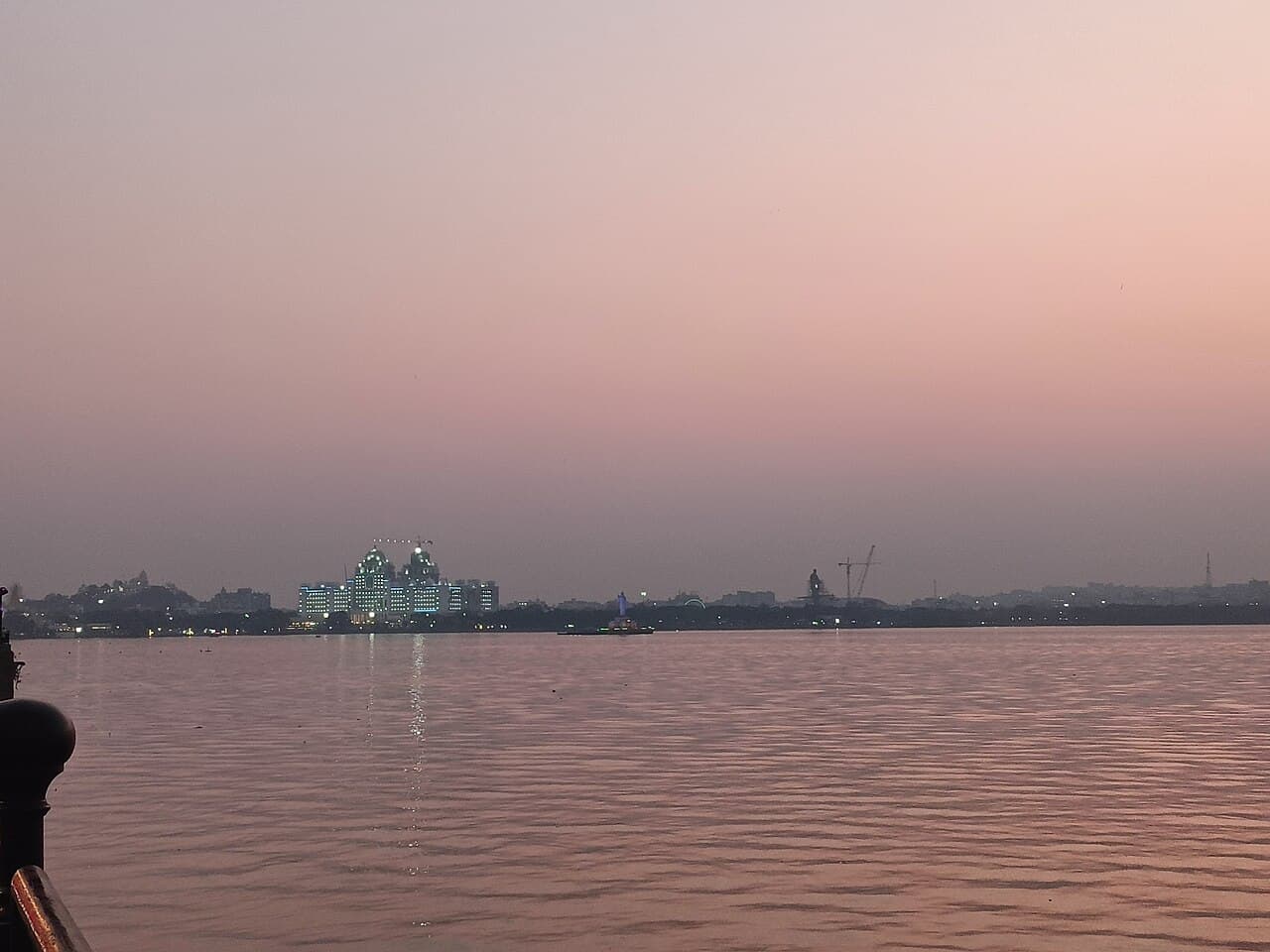
HMDA dates Hussain Sagar to 1562 and links it to Hussain Shah Wali and the Qutb Shahi period. The district administration explains its later public identity through the Buddha statue, Tank Bund and surrounding parks. The lake now works as a central landmark between Hyderabad and Secunderabad even though its original water function has changed.
Walk one named public edge rather than attempting the whole shoreline. From a park or promenade, identify bund, inflow direction, statues and the relationship between water and roads. Current boating, lighting and park access belong to separate operators and may change. A free view of the lake does not mean every jetty or lawn is always open.
- Choose a specific public edge before travelling.
- Look for infrastructure as well as the Buddha statue.
- Verify any paid activity with its current operator.
03
Do not hide Hussain Sagar's pollution history
HMDA's catchment page records sewage, industrial effluent, waste and nutrient-rich sediment as pollution pressures on Hussain Sagar. That official account matters because tourism descriptions often emphasise recreation. Both realities can be true: the lake can be a major public landmark and an environmentally stressed water body.
Describe the water honestly and use only authorised activities. Do not enter from an informal shore, discard offerings or packaging, or imply that a clear-looking surface proves water quality. Conditions can shift with rainfall and management work, so a water-sport operator's live instruction is more relevant than an old travel photograph. Responsible enjoyment begins with refusing the word pristine when evidence does not support it.
- Use designated facilities and shore space.
- Carry waste away or use provided bins.
- Do not infer water quality from appearance.
04
Follow the Musi through the historic core
The Musi Riverfront Development Corporation describes the Musi as a line separating the historic Old City to the south from newer areas to the north. Major institutions and historic buildings stand near its urban course, including Salar Jung Museum. The river therefore helps explain why bridges, markets and civic architecture occupy their particular positions.
The same official page describes low urban flows, catchment degradation, encroachment and pollution-related challenges. A riverbank is not automatically a public promenade, and a government vision for future parks or cycling routes is not proof that they are open now. Observe from lawful public roads, bridges or institutions and use current local notices for any riverfront construction zone.
- Use bridges to read north–south urban relationships.
- Keep off construction and informal riverbed routes.
- Separate present conditions from future project images.
05
Place Osman Sagar after the 1908 flood
Telangana Tourism says Osman Sagar was created by damming the Musi in 1920 to add a water source and help protect Hyderabad after the great flood of 1908. The Musi corporation links Osman Sagar and Himayat Sagar with the city's water history and describes their surrounding lands as protected conservation zones. The reservoirs belong to risk, supply and catchment management before they belong to recreation.
Public access, water level and park operations can change, especially around rain and infrastructure work. Confirm the current visitor area before making the road journey and never enter a closed catchment or dam structure for a photograph. If access is limited, the history can still be studied through official material without treating a protected water zone as a failed attraction.
- Connect the reservoir to flood history.
- Confirm the public visitor area, not only a map pin.
- Respect catchment and dam restrictions.
06
Find rainwater history inside the necropolis
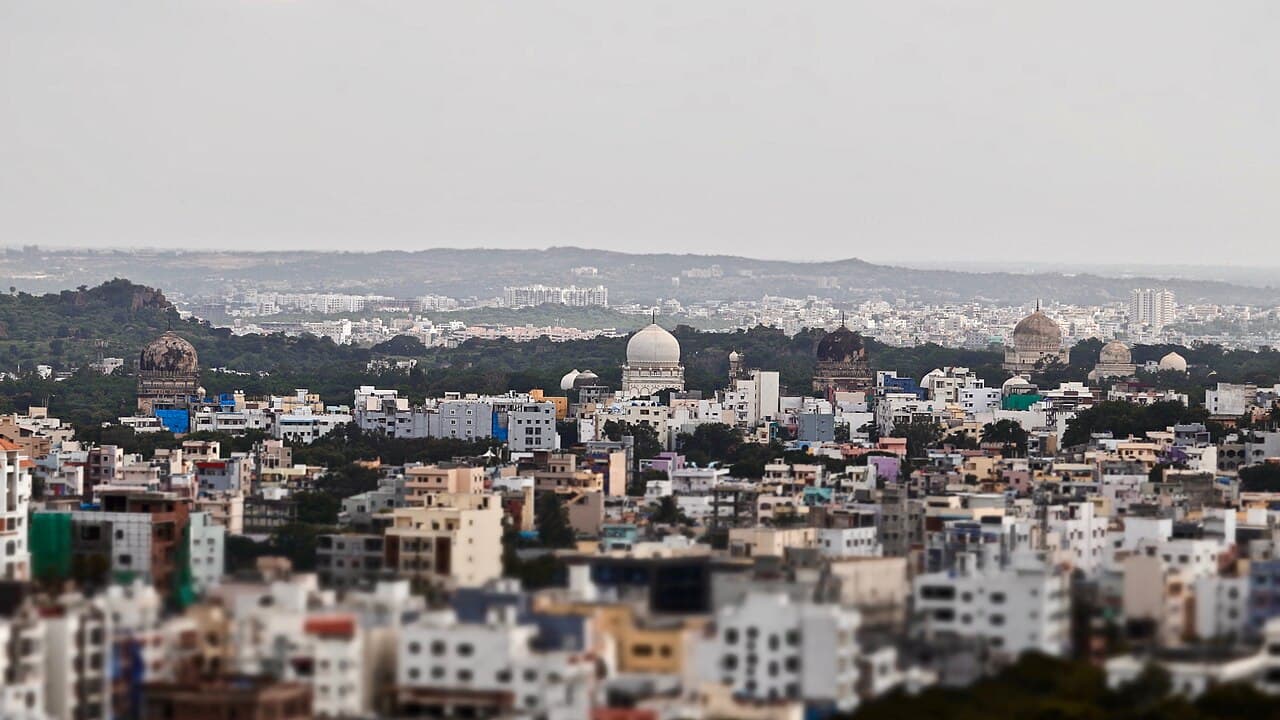
Qutb Shahi Heritage Park's visitor page identifies six baolis among its monuments and says restored stepwells collect rainwater within the landscape. Their presence shows that the royal necropolis also required practical systems for gardens and water. This is a smaller, more legible scale than the metropolitan lakes and reservoirs.
Trace the relationship from terrace to garden and stepwell without crossing any wall or barrier. Notice that conservation includes water performance as well as surface ornament. The park asks visitors to keep stepwell water clean and remain in designated areas. Those rules protect both people and historic fabric; they are also part of understanding the system as infrastructure rather than a photo prop.
- Look for level changes and catchment paths.
- Stay behind stepwell protection.
- Read landscape restoration with monument conservation.
07
Read riverfront proposals as plans, not openings
MRDCL publishes a vision involving ecological restoration, sewage interception, flood management, public space and transport along the Musi. This documents government intent and project scope. It does not establish that every illustrated promenade, bridge or recreation element is complete or available to visitors on 2026-09-14.
When planning a visit, distinguish three states: established public places such as a museum or named lakefront park, active works with changing access, and future proposals. Use current agency notices and visible lawful entrances for the first two. This language keeps the water story honest while projects evolve and prevents a visitor from following a concept image into a worksite.
- Label visions and proposals explicitly.
- Check current works and closures close to the visit.
- Do not recommend an unopened project as an attraction.
Useful answers
Reader questions
Is Hussain Sagar a natural lake?
No. HMDA and the district administration describe it as an artificial lake created in the Qutb Shahi period for water needs. Its current civic and recreational role developed later.
Sources: Hyderabad Metropolitan Development Authority; Hyderabad District, Government of TelanganaIs Hussain Sagar clean enough for any activity?
Do not assume so. HMDA documents serious historic pollution pressures. Use only authorised activities, follow current operator instructions and never infer water quality from how the surface looks.
Sources: Hyderabad Metropolitan Development AuthorityAre the new Musi riverfront promenades open?
MRDCL publishes a project vision, not a blanket opening notice for every proposed element. Check current government and on-site notices and use only established lawful public access.
Sources: Musi Riverfront Development Corporation Limited; Musi Riverfront Development Corporation LimitedWhere can visitors see historic stepwells in Hyderabad?
The Qutb Shahi Heritage Park visitor page identifies six baolis within the conserved necropolis. View them from designated areas and follow the park's current rules around walls, water and photography.
Sources: Qutb Shahi Heritage Park; Qutb Shahi Heritage Park and Aga Khan Trust for CultureRead the evidence
Sources and further reading
These sources support the relevant sections above. Plans and comparisons are editorial suggestions. Check operators for current arrangements.
- Hussain Sagar Lake and Catchment Area ↗Hyderabad Metropolitan Development Authority · Research date 14 September 2026
Lake date and original water role plus documented sewage, industrial, waste and sediment pollution pressures.
- Hussain Sagar Lake ↗Hyderabad District, Government of Telangana · Research date 14 September 2026
Hussain Sagar's Qutb Shahi history, central civic setting, Buddha statue and surrounding parks.
- About Musi River: A Symbol of Hyderabad's Heritage ↗Musi Riverfront Development Corporation Limited · Research date 14 September 2026
Musi course and urban role, reservoir relationship, current environmental pressures, conservation zones and corporation remit.
- Vision ↗Musi Riverfront Development Corporation Limited · Research date 14 September 2026
The government's riverfront programme as a future-facing vision involving ecology, sewage, flood control, public space and transport.
- Rangareddy ↗Telangana Tourism · Research date 14 September 2026
Osman Sagar's 1920 creation, relationship to the Musi, water-supply purpose and post-1908-flood protection context.
- Discover Qutb Shahi Heritage Park ↗Qutb Shahi Heritage Park · Research date 14 September 2026
Six baolis, restored rainwater function, visitor boundaries and stepwell etiquette.
- Qutb Shahi Heritage Park: A Journey Through Centuries of History ↗Qutb Shahi Heritage Park and Aga Khan Trust for Culture · Research date 14 September 2026
The park's combined monument, garden, archaeological and water-management landscape.
- Parks in Hyderabad ↗Telangana Tourism · Research date 14 September 2026
Named managed parks around the central lake area and their recreation context.
- Plan Your Visit ↗Salar Jung Museum · Research date 14 September 2026
Salar Jung Museum's position on the southern bank of the Musi and relationship to Old City institutions.