Cooler months suit forts and long walks
Plan a first heritage visit between November and February when possible, while still carrying sun protection for exposed stone and courtyards.
Cooler mornings allow more deliberate time on Golconda's stairways and at the open Qutb Shahi Tombs. Midday sunlight remains strong, so winter does not remove the need for water, a hat and breaks. Stone interiors can also feel cooler than the street after sunset.
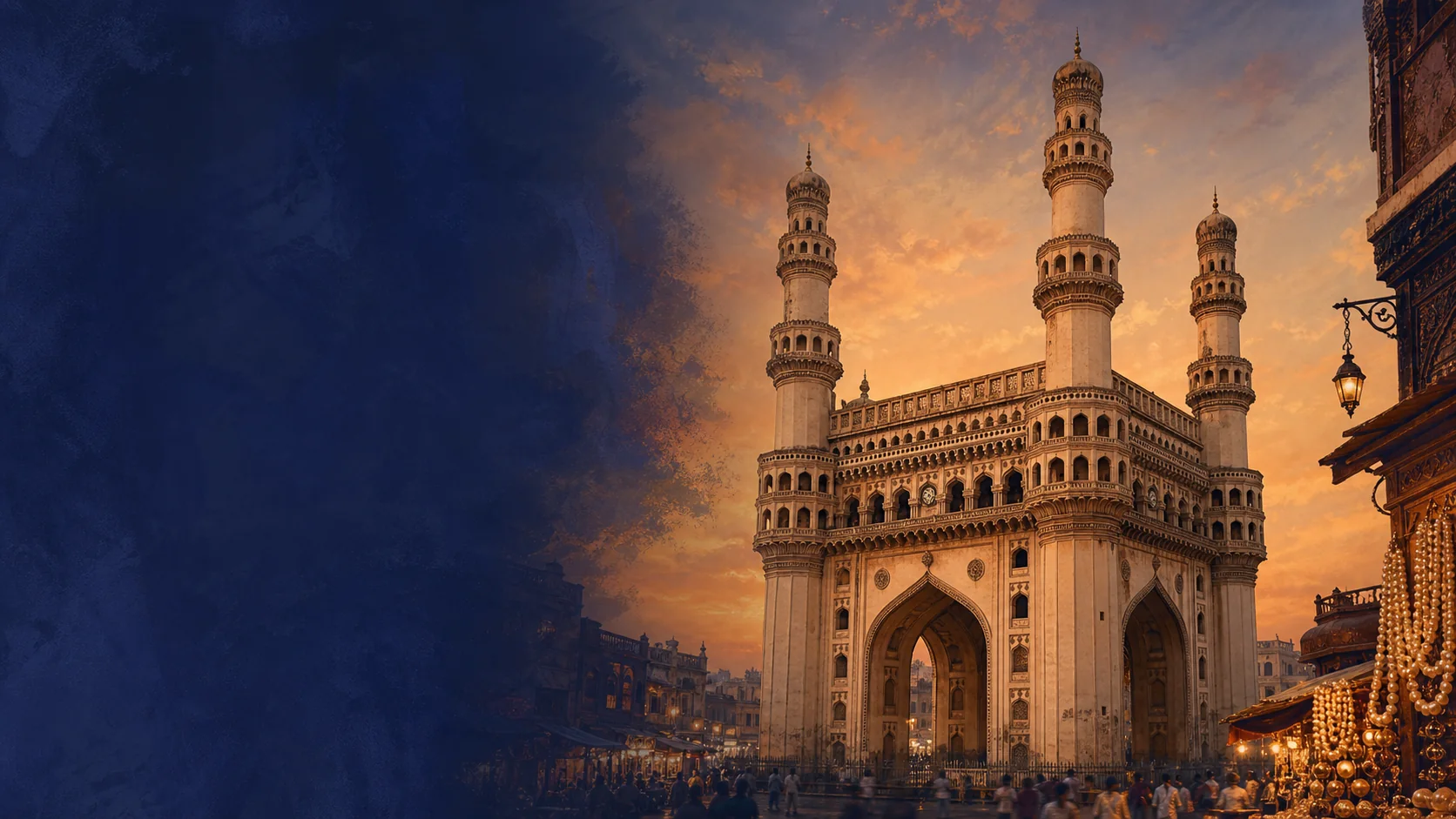
This period attracts leisure and wedding-season demand, which can affect accommodation and traffic around popular venues. Book essential travel early, but leave sightseeing hours flexible. Charminar and Chowmahalla Palace are better approached before roads and bazaars reach their busiest rhythm.
- Use IMD's Hyderabad forecast each morning.
- Carry a light evening layer without abandoning sun protection.
- Enter the Old City before the main shopping surge.
Pre-monsoon heat shortens monument days
From March into May, place one outdoor monument at the first practical entry and reserve the afternoon for collections or rest.
Golconda's granite climb becomes a poor midday choice during severe heat. Begin early, turn back before exhaustion and never ration drinking water to avoid carrying it. The landscaped tomb complex also has broad exposed sections, so shade breaks must be part of the route rather than an emergency response.
Salar Jung Museum offers a substantial indoor afternoon, although the journey to its entrance still occurs in city heat. Review IMD warnings for high temperatures or thunderstorms. A dust or lightning alert should cancel exposed viewpoints, not simply delay them until the sky looks briefly clearer.
- Recognise dizziness and nausea as reasons to stop.
- Keep oral rehydration and essential medication accessible.
- Avoid hilltop visits during lightning warnings.
Monsoon rain changes surfaces and traffic
June through September requires rain protection, secure footwear and a route that avoids fort climbs or narrow markets during intense downpours.
IMD seasonal normals show that Hyderabad receives most of its annual rainfall from June to September. Rain is not continuous, yet a short heavy spell can leave polished stone, fort steps and market approaches slippery. Wait under a safe permanent shelter instead of crowding a shop entrance or mosque gateway.
Museum days should be geographically compact because road congestion may persist after the cloudburst ends. Chowmahalla Palace and Salar Jung Museum can serve different indoor interests, but they are not linked by a weatherproof corridor. Protect electronics and documents in a sealed inner pouch.
- Wear footwear with wet-surface grip.
- Do not shelter beneath trees during thunderstorms.
- Check road and Metro notices before the return.
Religious and state festivals reshape the Old City
Visit during Ramadan, Eid, Bonalu or Bathukamma only with respect for their living religious and civic purpose, plus extra transport time.
The Hyderabad District guide identifies Mecca Masjid as a major sacred centre, while the surrounding food and shopping streets become active after sunset during Ramadan. This is first a period of worship and community life. Do not enter prayer flows for photographs, and avoid eating conspicuously beside fasting crowds during daylight.
Bonalu and Bathukamma have distinct Telangana traditions and locations, not a generic festival spectacle. Check the state's current programme and ask before photographing participants at close range. Processions can close roads or redirect public transport, so arrange the journey from an official notice rather than a previous year's route.
- Confirm festival dates for the actual travel year.
- Give processions and worshippers priority in the street.
- Avoid flash around devotional activity.
Choose dates from the hardest outdoor priority
Select cooler months for Golconda and bazaar walking; a museum, food or craft-led visit can succeed across a broader calendar.
Travellers whose main goal is the fort-and-tombs landscape benefit most from November through February. Someone concentrating on Salar Jung Museum, palace interiors, Deccani food and Shilparamam can tolerate hotter or wetter dates by shortening outdoor exposure. No season eliminates traffic between western Hyderabad and the Old City.
Check IMD's zone-specific city forecast close to each day, not only a monthly climate chart read before booking. Keep one nearby substitute: a museum for rain, an early market for later heat, or a central café when a festival blocks roads. Flexibility should preserve local depth, not create another distant journey.
- Let Golconda determine a heritage trip's season.
- Keep indoor choices in the same urban zone.
- Read IMD warnings rather than generic app icons.